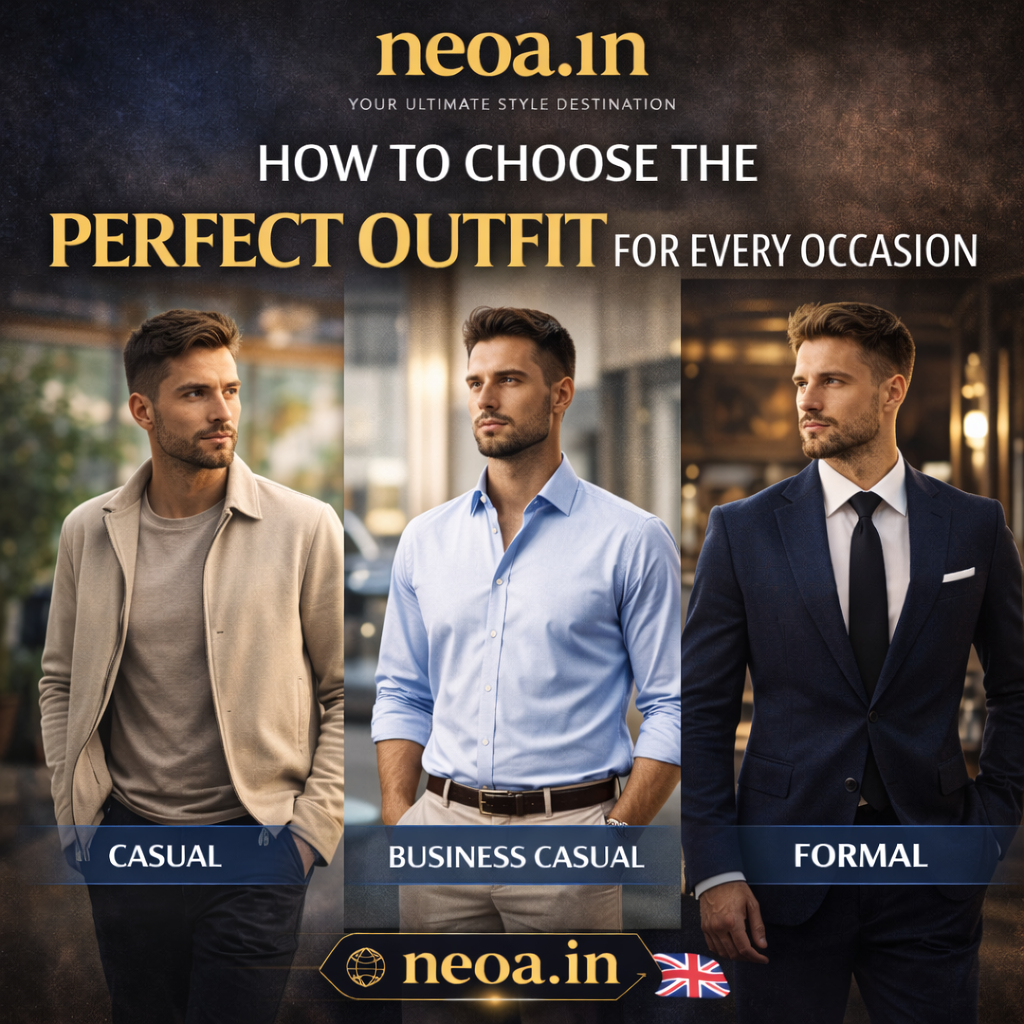
Choosing the right outfit for the right occasion is an important skill in modern men’s fashion. While clothing trends change frequently, knowing how to dress appropriately for different situations remains timeless. The way a person dresses can influence first impressions, confidence and even social or professional opportunities.
In the United Kingdom and many other parts of the world, different events often require different dress codes. Understanding these dress codes helps men present themselves in a stylish, confident and respectful manner.
This guide explains how to choose the perfect outfit for different occasions while maintaining a balanced and sophisticated style.
Why Dressing for the Occasion Matters
Clothing communicates messages about personality, professionalism and social awareness. Wearing the right outfit for an event shows that a person understands the environment and respects the situation.
Benefits of Dressing Appropriately
| Benefit | Explanation |
|---|---|
| Strong first impression | People judge appearance quickly |
| Increased confidence | Feeling well-dressed boosts self-esteem |
| Social respect | Shows awareness of event expectations |
| Professional image | Important in work environments |
When clothing matches the occasion, it creates a natural sense of confidence and comfort.
Understanding Common Dress Codes
Many events follow general dress code guidelines. Understanding these categories helps men choose outfits more easily.
Major Dress Codes
| Dress Code | Description |
|---|---|
| Casual | Relaxed everyday clothing |
| Smart Casual | A balance between relaxed and polished |
| Business Casual | Professional but comfortable |
| Formal | Elegant and traditional attire |
| Black Tie | Highly formal evening dress |
Each dress code requires different clothing combinations.
Casual Outfits
Casual clothing is suitable for everyday activities such as meeting friends, shopping or travelling. Comfort is the main priority while still maintaining a neat appearance.
Example Casual Outfit
| Clothing Item | Example |
|---|---|
| Top | Plain T-shirt or polo shirt |
| Bottom | Jeans or casual trousers |
| Shoes | Sneakers |
| Outerwear | Light jacket or hoodie |
Casual style should still look clean and coordinated rather than careless.
Smart Casual Outfits
Smart casual is one of the most common dress styles today. It blends formal and casual elements to create a relaxed but polished look.
Example Smart Casual Outfit
| Clothing Item | Example |
|---|---|
| Top | Oxford shirt or knit sweater |
| Bottom | Chinos |
| Shoes | Loafers or clean sneakers |
| Outerwear | Blazer or tailored jacket |
This style is popular for dinners, casual offices and social gatherings.
Business Casual Outfits
Business casual clothing is common in modern workplaces where full formal attire is not required but professionalism is still important.
Example Business Casual Outfit
| Clothing Item | Example |
|---|---|
| Shirt | Button-down dress shirt |
| Bottom | Tailored trousers or chinos |
| Shoes | Leather loafers or dress shoes |
| Optional | Blazer |
Business casual outfits should appear neat, professional and comfortable.
Formal Event Outfits
Formal events such as weddings, ceremonies or professional gatherings require more refined clothing.
Example Formal Outfit
| Clothing Item | Example |
|---|---|
| Suit | Navy or charcoal suit |
| Shirt | White dress shirt |
| Shoes | Leather Oxford shoes |
| Accessories | Tie and watch |
Proper tailoring is essential for formal clothing because fit significantly influences overall appearance.
Black Tie Events
Black tie events are among the most formal occasions. These events usually take place in the evening and require elegant attire.
Example Black Tie Outfit
| Clothing Item | Example |
|---|---|
| Jacket | Black tuxedo |
| Shirt | White formal shirt |
| Tie | Black bow tie |
| Shoes | Patent leather shoes |
Although black tie events are less common, understanding the dress code is still valuable.
Choosing the Right Colours
Colour coordination plays a major role in creating stylish outfits. Neutral colours are usually the safest choice for most occasions.
Popular Colour Choices
| Colour | Best Use |
|---|---|
| Navy | Formal and business wear |
| Grey | Professional environments |
| White | Shirts and summer outfits |
| Black | Formal evening wear |
| Beige | Casual and summer clothing |
Neutral colours allow clothing items to match easily.
Seasonal Considerations
Weather conditions often influence clothing choices, especially in the UK where seasons can vary significantly.
Seasonal Outfit Guide
| Season | Recommended Clothing |
|---|---|
| Spring | Light jackets and breathable fabrics |
| Summer | Lightweight shirts and cotton trousers |
| Autumn | Sweaters and layered outfits |
| Winter | Wool coats, scarves and boots |
Choosing seasonally appropriate fabrics ensures comfort and practicality.
Accessories That Complete the Outfit
Accessories can enhance an outfit when used appropriately.
Common Accessories
| Accessory | Purpose |
|---|---|
| Watch | Adds sophistication |
| Belt | Matches shoes and completes outfit |
| Sunglasses | Stylish and practical |
| Tie | Important for formal events |
Accessories should complement clothing rather than overpower it.
Common Dressing Mistakes
Even well-dressed individuals sometimes make mistakes when choosing outfits.
Mistakes to Avoid
- Wearing clothing that does not fit properly
- Ignoring the event dress code
- Mixing too many colours or patterns
- Wearing worn-out or wrinkled clothes
- Choosing uncomfortable clothing
Avoiding these mistakes helps maintain a clean and polished appearance.
Developing Personal Style
While dress codes provide guidelines, personal style allows individuals to express their personality.
Some people prefer classic fashion while others enjoy modern or minimalist styles. The most important factor is choosing clothing that feels comfortable and reflects personal identity.
Over time, experimenting with different outfits helps individuals discover what suits them best.
Conclusion
Choosing the perfect outfit for every occasion requires understanding dress codes, selecting appropriate clothing and paying attention to details such as fit, colour and accessories.
By learning how to balance comfort, style and appropriateness, men can build versatile wardrobes that suit many different situations.
Ultimately, the best outfits are those that combine confidence, simplicity and good taste. When clothing matches both the occasion and personal style, it creates a lasting impression and enhances overall presence.