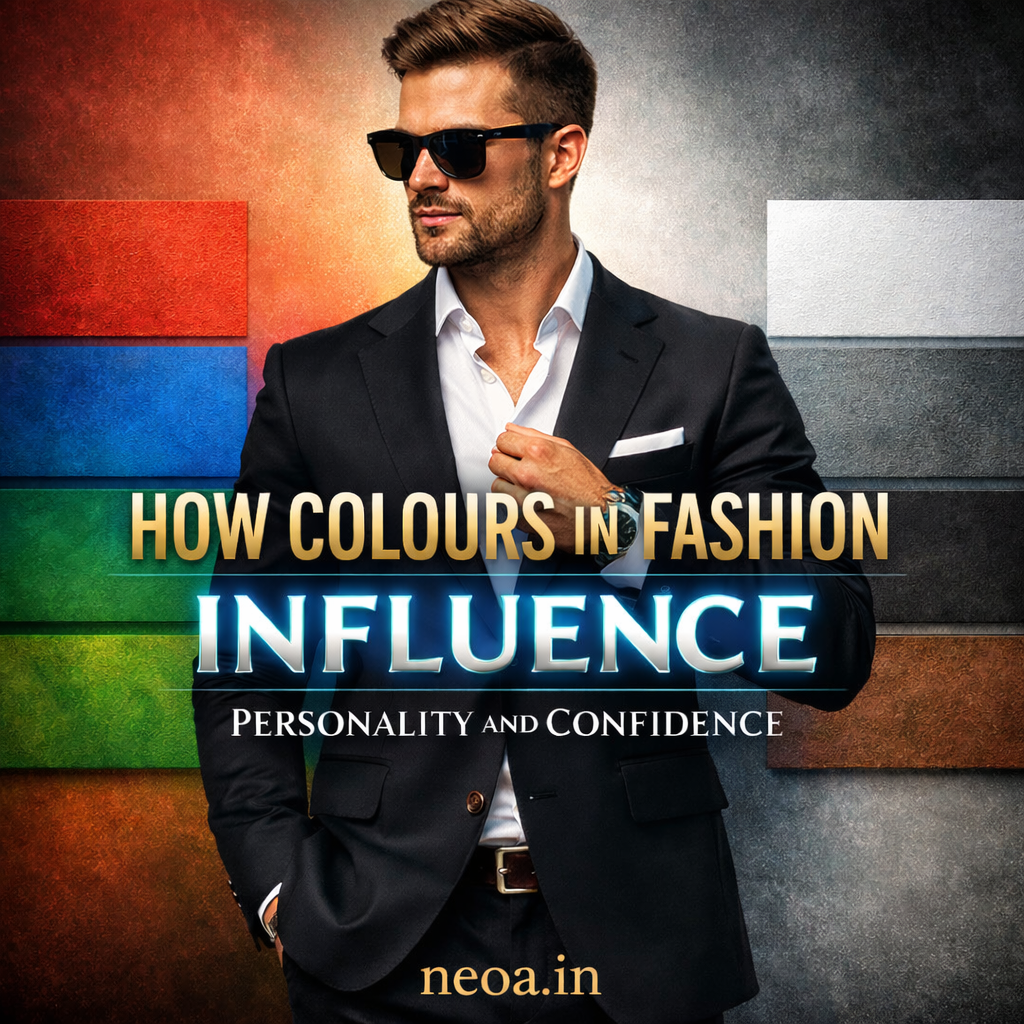
Colour plays a powerful role in fashion and personal style. The colours people choose to wear can influence how others perceive them and how they feel about themselves. In men’s fashion, colour choices often reflect personality, mood and confidence.
While clothing design and fit are important, the colour of an outfit can significantly affect its overall impact. Different colours communicate different messages, ranging from authority and professionalism to creativity and relaxation.
This article explores how colours influence personality and confidence in fashion, and how men can use colour strategically to enhance their style.
The Psychology of Colour in Fashion
Colour psychology studies how colours affect human emotions and behaviour. In fashion, colour influences first impressions and the way people interpret someone’s personality.
Certain colours are commonly associated with particular qualities.
Common Colour Associations
| Colour | Personality Impression |
|---|---|
| Black | Power, sophistication |
| Blue | Trust, reliability |
| White | Cleanliness, simplicity |
| Grey | Professionalism, neutrality |
| Red | Energy, confidence |
| Green | Balance, calmness |
| Brown | Stability, warmth |
Understanding these associations helps individuals make better fashion choices.
How Colours Affect Confidence
The colours people wear can directly influence their confidence levels. Wearing clothing that reflects personality and mood can create a positive psychological effect.
For example:
- Dark colours often create a strong and authoritative appearance.
- Bright colours may convey creativity and energy.
- Neutral colours provide a calm and balanced impression.
When individuals feel comfortable with their clothing colours, they tend to appear more confident in social situations.
The Power of Neutral Colours
Neutral colours are a fundamental part of men’s fashion because they are versatile and easy to combine.
Popular Neutral Colours
- Black
- White
- Grey
- Navy
- Beige
These colours form the foundation of many wardrobes because they match easily with other shades.
Benefits of Neutral Colours
| Advantage | Explanation |
|---|---|
| Easy to mix | Matches with many other colours |
| Professional look | Suitable for work environments |
| Timeless style | Rarely goes out of fashion |
Neutral colours are especially useful for building a minimalist wardrobe.
Bold Colours and Personal Expression
While neutral colours are practical, bold colours allow individuals to express personality and creativity.
Popular Bold Colours
| Colour | Style Impact |
|---|---|
| Red | Attention-grabbing and energetic |
| Yellow | Bright and optimistic |
| Purple | Creative and unique |
| Orange | Vibrant and adventurous |
Using bold colours in moderation can make outfits more interesting.
For example, a red jacket or colourful sneakers can become the highlight of an outfit.
Choosing Colours Based on Occasion
Different situations often require different colour choices.
Colour Guide for Occasions
| Occasion | Recommended Colours |
|---|---|
| Business meetings | Navy, grey, black |
| Formal events | Black, white, dark blue |
| Casual outings | Beige, olive, light blue |
| Social gatherings | Brighter colours allowed |
Selecting appropriate colours helps maintain a balanced and professional appearance.
Seasonal Colour Choices
Fashion colours often change with the seasons.
Seasonal Colour Guide
| Season | Common Colours |
|---|---|
| Spring | Light blue, pastel colours |
| Summer | White, beige, light grey |
| Autumn | Brown, olive, dark green |
| Winter | Black, navy, charcoal |
These colour choices often reflect natural seasonal environments.
Colour Matching Tips
Creating a stylish outfit requires careful colour coordination.
Basic Colour Matching Rules
- Combine neutral colours with bold colours for balance.
- Avoid mixing too many bright colours in one outfit.
- Match shoe colour with belts or accessories.
- Keep patterns simple when using multiple colours.
Following these simple rules helps maintain a clean and stylish appearance.
How Colour Reflects Personality
People often choose clothing colours that reflect their personalities.
Personality and Colour Preferences
| Personality Type | Common Colour Choices |
|---|---|
| Confident individuals | Black, red |
| Calm personalities | Blue, green |
| Creative individuals | Purple, orange |
| Minimalist style | White, grey, beige |
While these associations are not absolute, colour preferences often provide insight into personal style.
The Role of Accessories in Colour Styling
Accessories offer an easy way to introduce colour into an outfit.
Examples of Colourful Accessories
- Scarves
- Watches
- Shoes
- Bags
- Hats
These small elements allow individuals to experiment with colour without overwhelming the outfit.
Common Colour Mistakes
Many people make mistakes when combining colours in fashion.
Mistakes to Avoid
- Wearing too many bright colours together
- Ignoring colour harmony in outfits
- Wearing colours that clash strongly
- Overusing dark colours in casual settings
Maintaining balance is the key to effective colour styling.
Building a Balanced Colour Wardrobe
A well-balanced wardrobe usually includes both neutral and bold colours.
Ideal Colour Wardrobe Structure
| Category | Examples |
|---|---|
| Neutral base | Black, navy, grey |
| Light colours | White, beige |
| Accent colours | Red, green, burgundy |
This structure allows flexibility while maintaining a stylish appearance.
Conclusion
Colour plays an essential role in fashion and personal style. The colours people choose to wear influence not only how others perceive them but also how they feel about themselves.
By understanding colour psychology, coordinating outfits carefully and selecting colours appropriate for different occasions, men can enhance both their style and confidence.
Ultimately, fashion is a form of self-expression. Choosing the right colours allows individuals to communicate personality, mood and creativity through their clothing.