

If your blood pressure runs high and you want a calm, gentle way to help it, yoga for seniors with high blood pressure can be a real part of your daily routine — as long as you pick the right moves and leave out the ones that push pressure up. This guide is for people 60 and over. It is general education, not medical advice. Talk to your doctor before you start, and stop any move that makes you dizzy, short of breath, or gives you a headache.
What high blood pressure means for your body
Blood pressure is the force of blood pushing against the walls of your arteries. A reading has two numbers: the top number (systolic) is the pressure when the heart beats, and the bottom number (diastolic) is the pressure between beats. A reading that stays at 130 over 80 or higher is high blood pressure.
High blood pressure usually has no symptoms. Over years, it strains the heart, the arteries, the kidneys, and the eyes. Age raises the odds: blood vessels stiffen with time, and more than half of adults over 65 have high blood pressure. The good news is that it responds to daily habits — less salt, regular movement, good sleep, less stress — and gentle yoga touches three of those at once.
What yoga can and cannot do
Here is the honest part first: yoga does not cure high blood pressure, and it is not a replacement for medication. If your doctor prescribed blood pressure medicine, keep taking it exactly as directed.
What a slow, regular practice can do is real, just smaller. Slow breathing with a long exhale calms the stress response and lets blood vessels relax a little. Gentle movement keeps joints loose and muscles working without spiking your heart rate. A short daily routine lowers stress, and stress is one of the things that pushes readings up. Studies of slow breathing and gentle yoga have shown small but real drops over weeks — a few points, not twenty. A 2024 peer-reviewed review of yoga for hypertension reports that yoga practice helps in clinically relevant reduction in blood pressure in people with hypertension: https://pmc.ncbi.nlm.nih.gov/articles/PMC10989416/ That is the goal of yoga for seniors with high blood pressure: a steady daily habit that supports your treatment, not a quick fix. As for which style is best, there is no single right one — slow, gentle yoga with normal breathing is the safe choice, and the pace matters more than the style.
The breathing that matters most
Breathing is the heart of this practice, not the poses. When you breathe out slowly, your heart rate drops and your blood vessels ease open.
1. Slow belly breathing (4 in, 6 out)
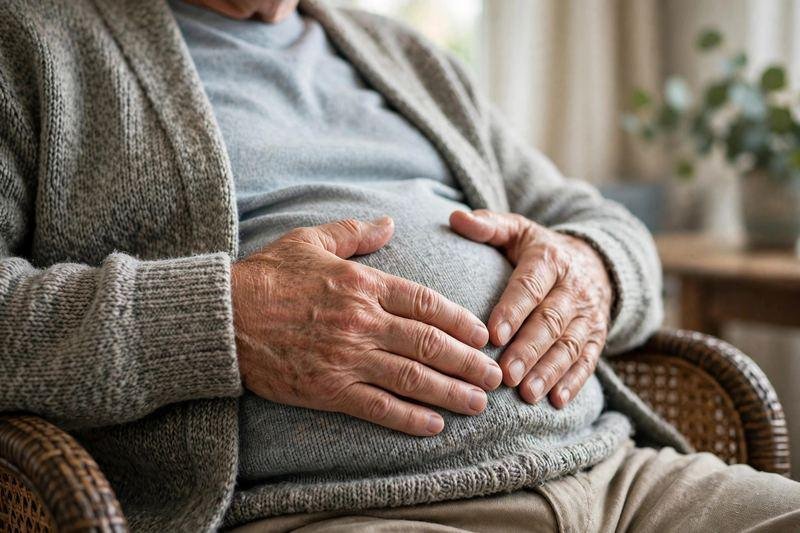
Sit tall in a sturdy chair, feet flat on the floor, one hand on your belly and one on your chest. Breathe in slowly through your nose for a count of 4 and let your belly push your hand out; your chest should barely move. Breathe out through pursed lips for a count of 6, slow and steady. Do this for 5 minutes.
The long exhale is the part that matters. If 4 in and 6 out feels like a struggle, start with 3 in and 4 out and build up over two weeks. If you feel light-headed, go back to normal breathing for a minute. Never hold your breath — it raises pressure in the chest and can spike your reading.
Once belly breathing feels easy, try a longer exhale: breathe in for 4, breathe out for 8. The exhale is twice as long as the inhale. Build to 5 minutes over a few weeks, sitting down — a long exhale can make some people feel woozy for a few seconds.
2. Humming breath (Bhramari) — with a warning
Humming breath means humming a long, low sound on the exhale — a soft “mmm” that vibrates in your throat and chest. It calms the mind fast. Skip it if your blood pressure is uncontrolled, you have a heart condition, or you are pregnant. If your blood pressure is controlled, a soft hum for 1 to 2 minutes is fine.
Gentle poses that help
These poses are all slow, supported, and done with normal breathing. None of them puts your head below your heart. Sit tall for all of them — slumped sitting compresses the chest and makes breathing shallow.
Seated side stretch

Sit tall. Breathe in and raise your right arm overhead. Breathe out and lean gently to the left until you feel a stretch down your right side. Hold for 20 seconds, breathing normally. Come back up, then repeat on the other side. Do each side twice. Keep the lean small. If your shoulder is stiff, rest your hand on the chair back instead of raising it overhead.
Seated twist
Sit tall, feet flat. Breathe in and lengthen your spine. Breathe out and turn gently to the right, left hand on your right knee, right hand on the chair behind you. Hold for 20 seconds, breathing normally. Come back to centre and repeat on the left. Twists should feel easy — if you have to force it, you have turned too far.
Legs up on a chair
Lie on your back and swing your legs up onto a chair seat or a stack of pillows, so your calves rest at about hip height. Stay for 5 to 6 minutes, breathing slowly. If lying flat makes you short of breath, prop your head and shoulders on two pillows.
Poses to leave out
Some yoga poses raise blood pressure. Leave these out:
- Inversions: headstands, shoulder stands, and plow pose put your head below your heart and raise pressure in the head. Skip them entirely.
- Deep forward folds: bending far forward with your head hanging down has the same problem. A gentle seated forward bend with your head at or above heart level is fine; hanging your head low is not.
- Deep backbends: full camel pose and wheel pose strain the spine and spike pressure. A small chest opener is fine; a deep backbend is not.
- Hot yoga and fast flows: heated rooms and rapid sequences raise heart rate and blood pressure. Stick to slow, room-temperature practice.
- Anything that makes you hold your breath: if you catch yourself holding your breath to get into a pose, back off. Breath-holding raises pressure in the chest.
When to practise
Morning is the best time for most people: blood pressure is often highest in the morning, and a calm session before breakfast sets a steady tone for the day. Evening works too — a gentle session 30 to 60 minutes before bed helps you fall asleep. Do the breathing first, then the poses, then sit quietly for a minute before you get up. What matters most is doing it at the same time every day.
How often, and how long before you notice a change
Do this routine daily if you can, or at least 5 days a week. Do not expect your readings to change in a week: most people notice small changes in 4 to 6 weeks — a calmer morning reading, less tension in the shoulders, falling asleep faster. After 8 to 12 weeks, the change is usually clear enough to mention at your next doctor visit.
Keep a blood pressure log: measure at the same time each day, sitting down, after 5 minutes of rest, feet flat and arm supported at heart level. Write down the reading, the date, and the time, and bring the log to your doctor — it is far more useful than one reading in the clinic.
Measuring your blood pressure the right way
A home cuff is only useful if you use it right. These mistakes are common, and each one can push your reading up by 5 to 10 points:
- Measuring right after coffee, exercise, or a meal — wait 30 minutes.
- Talking while the cuff runs — stay silent and still.
- Arm hanging down — rest it on a table at heart level.
- Cuff over a thick sleeve — roll the sleeve up.
- Feet dangling or legs crossed — sit with feet flat, back supported.
- Measuring once and panicking — take two readings a minute apart and write down the average.
Measure at the same time each day, before your yoga session, not right after it. A reading taken right after slow breathing will look lower than your usual reading.
Yoga and your medication
Yoga for seniors with high blood pressure works alongside your medication, never instead of it. Keep taking your medicine exactly as your doctor prescribed. If your readings start dropping after weeks of regular practice, tell your doctor — they may want to adjust your dose, but that is their call, not yours.
Some blood pressure medicines can make you dizzy when you stand up quickly. Move slowly between positions — sit for a few seconds before you stand, and stand for a few seconds before you walk. If you feel dizzy, sit back down and breathe normally until it passes, then tell your doctor.
Your 15-minute daily routine
Here is the whole session of yoga for seniors with high blood pressure, in order. Do it once a day, morning or evening.
- Slow belly breathing — 5 minutes (4 in, 6 out).
- Seated side stretch — 2 minutes (20 seconds each side, twice).
- Seated twist — 2 minutes (20 seconds each side, twice).
- Legs up on a chair — 6 minutes, slow breathing.
Total: 15 minutes. If you only have 5 minutes, do step 1. A short routine done most days beats a long one done once a week.
Safety first
This guide is general education, not medical advice. Talk to your doctor before you start, especially if your blood pressure is uncontrolled or you have heart disease, a recent stroke, kidney problems, or you use oxygen. Stop any exercise that makes you dizzy, short of breath, or gives you chest pain or a headache. Never hold your breath. If you get a reading over 180 over 120, or you have chest pain, trouble breathing, or sudden vision changes, seek urgent medical care.
Frequently Asked Questions
Which yoga is best for high BP?
Slow, gentle yoga with long exhales — not a brand name or a fast style. Seated and standing poses done with normal breathing, plus 5 minutes of slow belly breathing, are the safest bet. Skip hot yoga, fast flows, and inversions. The pace matters more than the style: slow, steady, and easy to breathe through.
Can yoga reduce high blood pressure in seniors?
It can help, a little, over time. Slow breathing with a long exhale calms the stress response and lets blood vessels relax, and regular practice has shown small drops over weeks — a few points, not twenty. Yoga supports your treatment; it does not replace medication.
Can I do yoga if I have high blood pressure?
Yes, most seniors with high blood pressure can do gentle yoga — as long as you stick to slow breathing and poses that keep your head above your heart. Skip inversions, deep forward folds, deep backbends, hot yoga, and anything that makes you hold your breath. Talk to your doctor first, especially if your blood pressure is uncontrolled.
What is the best exercise for seniors with high blood pressure?
Walking is the best all-round choice — 30 minutes a day at a pace where you can still talk. Gentle yoga is a good partner to walking: it adds slow breathing, balance, and flexibility without straining the heart. Avoid heavy lifting and any exercise where you hold your breath to push through it.
What is the 60 second trick to lower blood pressure?
There is no trick that lowers blood pressure in 60 seconds. Slow breathing for a few minutes can nudge your reading down by a few points, because a long exhale calms the stress response — but that is minutes of breathing, not seconds, and the effect is small and short-lived. Real change comes from daily habits over weeks: medication as prescribed, less salt, regular walking, good sleep, and less stress.
Start today: sit in a sturdy chair and do five minutes of slow belly breathing — 4 in, 6 out — before breakfast tomorrow. For a gentler start, try chair yoga for seniors, and pair this with morning stretches for seniors, bedtime yoga for seniors, or balance yoga for seniors. For other kinds of pain, see yoga for seniors with sleep apnea, yoga for seniors with neuropathy, yoga for seniors after knee replacement, yoga after hip replacement for seniors, or yoga for seniors with arthritis. See the About page and the Contact Us page, and read the Privacy Policy and Disclaimer.