
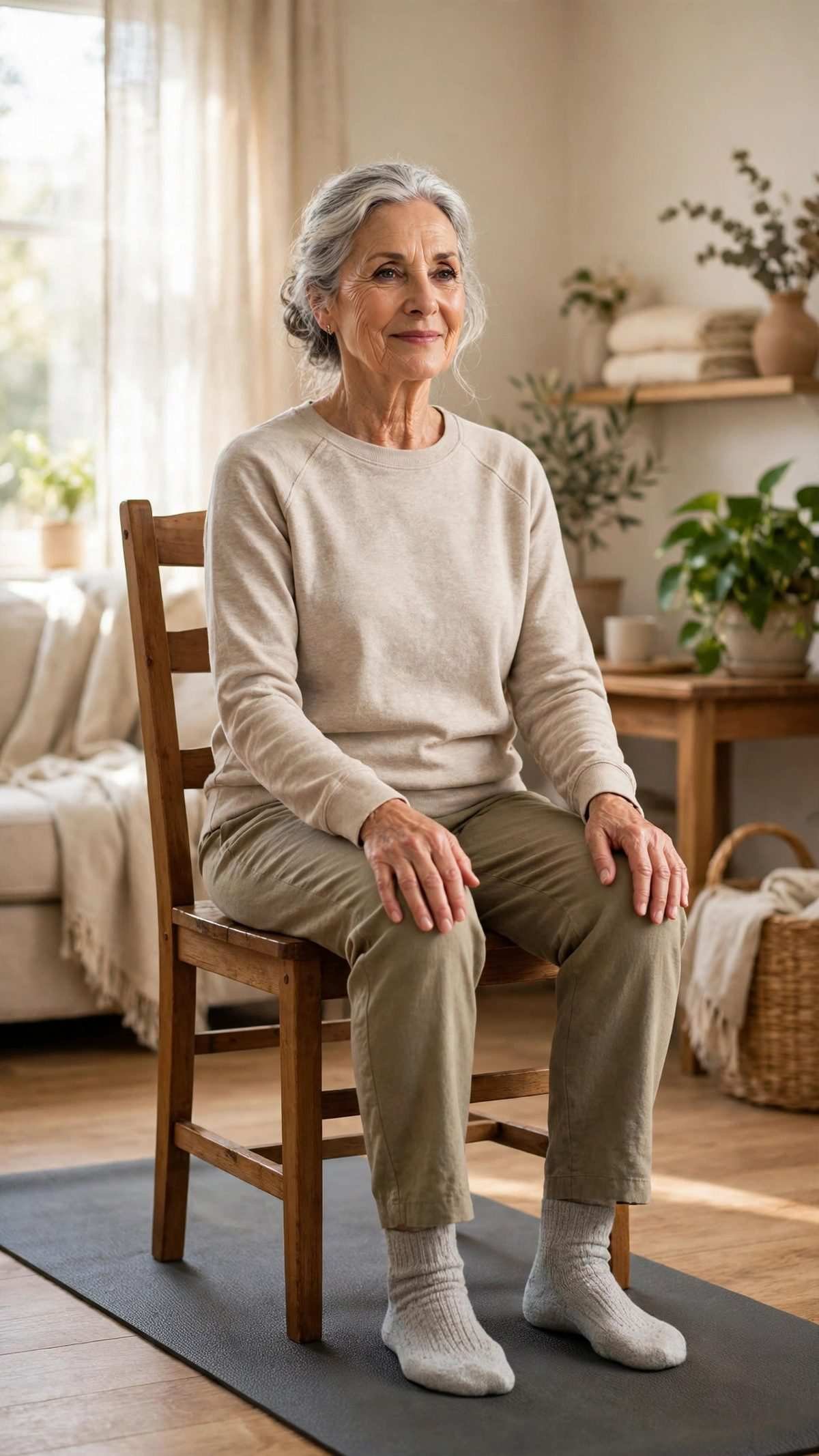
If your feet tingle, burn, or feel strangely numb by the end of the day, yoga for seniors with neuropathy can help you move with more confidence — as long as you pick the right poses and leave out the ones that work against you. This guide is for people 60 and over whose feet have gone quiet or prickly, whether from diabetes, past chemotherapy, or age itself. It is general education, not medical advice. Talk to your doctor before you start, and stop any move that causes sharp pain.
What neuropathy actually is
Neuropathy means the small nerves in your feet are not sending clear signals to your brain. Think of those nerves as thin wires running from your feet up to your spine. When the wires are damaged, messages arrive garbled or not at all. That is why your feet can feel numb and yet burn at the same time.
The most common cause in older adults is diabetes: high blood sugar over many years wears down the smallest nerves first. Chemotherapy, low vitamin B12, and some medicines can also play a part. Typical signs are tingling, pins and needles, and burning.
What yoga can and cannot do for numb, tingling feet
Here is the honest answer to the question most people ask first: can yoga help numb, tingling feet, or does it only help pain? It helps both — but only up to a point.
Moving your feet and ankles pumps blood into the tissues and wakes up quiet muscles. Better blood flow can ease the burning after a session.
What yoga cannot do is repair damaged nerves or cure neuropathy — no pose regrows a nerve. Research is still early: small studies show less pain, but not enough to promise a cure. One research-backed overview puts it plainly: yoga is a low-risk support, not a fix — https://www.annecatherineyoga.com/blog/yoga-and-neuropathy-how-gentle-movement-can-support-nerve-health
Yoga for seniors with neuropathy means steadier walking, calmer feet, and less fear of falling. It manages symptoms; it does not reverse the condition.
Is yoga safe when you can barely feel your feet?
Yes, with three rules that are not optional.
Rule 1: Start in a chair. Do your first two weeks seated. Standing balance work comes later, only with a chair back under your hands.
Rule 2: Keep your eyes open and look at your feet. Your eyes are now doing part of the job your feet used to do. During every balance move, fix your eyes on one spot on the floor or on your feet.
Rule 3: Check your feet before and after every session. Look at the tops and soles for red spots, blisters, or small cuts. Numb feet can pick up a blister and you will not feel it. Practice barefoot at home, or in thin socks.
Can yoga make neuropathy worse?
It can, if you do the wrong kind. Hot yoga is the worst choice: a heated room hides warning signs, and heat can make burning and swelling worse. Deep stretches held for a long time irritate a damaged nerve. Standing balance without support is the third risk — a wobble a healthy foot corrects can become a fall.
Watch for these warning signs after a session: burning that ramps up instead of settling within 30 minutes, swelling in one foot, or more tingling the next morning. Any of these means you pushed too far — cut the session in half and stay seated.
Why your balance feels worse since the numbness started
Your feet are your body’s position sensors. Every second you stand, tiny nerves in your soles, ankles, and toes tell your brain exactly where your feet are and how your weight is spread. Doctors call this proprioception. When neuropathy dulls those signals, your brain gets a blurry picture — and a blurry picture means wobble.
That is why balance feels worse even though your legs are just as strong. The muscles are fine; the information is missing.
Chair-supported yoga retrains the system that is left. Slow weight shifts teach your ankles to read pressure again.
The best first move for numb feet
If you do only one thing from this guide, do this: seated ankle pumps. Sit tall, feet flat, and slowly point your toes away from you, then pull them back toward your shins. Do 10 to 15 slow reps.
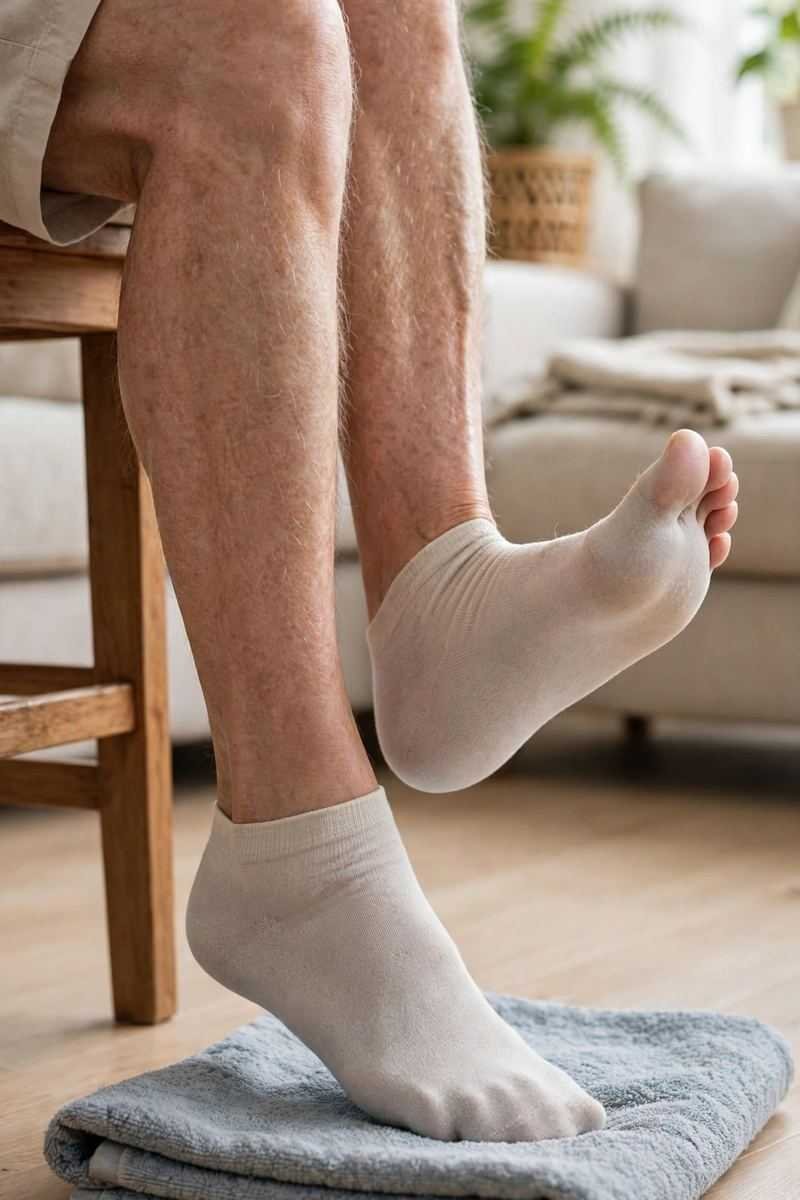
It should feel like a gentle stretch and a mild squeeze in the calf. A mild buzz or warmth in your feet is normal.
Two moves pair well with it. Heel-toe rocks: lift your heels, press the balls of your feet down, then lift your toes and press your heels down — 10 slow rocks. Toe spreads: spread your toes wide, hold three seconds, then relax. Do 10.
Your seated routine: 10 minutes, step by step
Do this routine in a sturdy chair, once a day to start. If any move gives sharp pain, skip it.
1. Ankle pumps — 10 to 15 reps. Point your toes away, then pull them back. Two seconds each way.
2. Toe spreads and squeezes — 10 reps. Spread your toes wide, hold three seconds, then curl them down and hold three seconds.
3. Heel-toe rocks — 10 reps. Rock from heels to toes.
4. Seated calf stretch — hold 30 seconds, twice each leg. Loop a belt or towel around the ball of one foot, straighten the leg, and pull gently to a mild stretch. Hold 30 seconds.
5. Seated knee straightening — 10 reps each leg. Sit tall, hold the chair seat, and slowly straighten one knee. Hold 5 seconds, squeezing the front of the thigh, then lower slowly.
6. Tennis ball foot roll — 1 minute each foot. Roll a tennis ball slowly from heel to toes under one foot, pressing lightly. Check the sole after: any red mark should fade within 10 minutes.
Finish by sitting still one minute, feet flat, breathing slowly.
Standing, only with chair support
After two weeks of seated practice, add a short standing section — both hands resting lightly on the chair back, never with your eyes closed.

Supported mountain pose — 30 seconds. Stand behind the chair, feet hip-width apart, fingertips on the chair back. Hold for 30 seconds, breathing slowly.
Heel raises — 10 reps. Holding the chair, rise slowly onto the balls of your feet, hold for 3 seconds, and lower slowly.
Side-to-side weight shifts — 10 reps. Stand behind the chair and slowly shift your weight onto your right foot, then onto your left.
Stop at once if you feel dizzy or your feet go from tingling to burning. Sit down and try again tomorrow.
Breathing: slow belly breathing
Sit in your chair, one hand on your belly. Breathe in through your nose for a count of 4, feeling your belly rise. Breathe out slowly for a count of 6, feeling your belly fall. Do 5 rounds, about two minutes — at the end of your routine, or before bed when burning feet keep you awake.
Your simple daily schedule
Ten minutes in the morning, five minutes in the evening. That is the whole plan.
Morning, 10 minutes: the full seated routine above, right after breakfast.
Evening, 5 minutes: ankle pumps, heel-toe rocks, and the slow belly breathing. Keep a notebook by your chair and write one line a day: how your feet felt before and after.
Rest days are fine — missing one day costs nothing.
Common mistakes that slow you down
Pushing through burning pain. A mild stretch is fine. Burning that climbs while you hold a pose means stop.
Skipping the foot check. A blister you cannot feel can turn into an open sore in a week. The check takes 30 seconds.
Using a rolling chair. A chair on wheels can slide out from under you. Use a solid kitchen chair against a wall.
Trying hot yoga. Heated rooms and heating pads hide pain signals and can make burning worse. Keep your practice at room temperature.
Doing too much on a good day. Double the routine and the bill arrives the next morning. Add five minutes a week.
Troubleshooting: when things feel off
More tingling right after a session. A mild rise for 10 to 15 minutes is common and settles on its own. If it lasts over an hour, cut the routine in half for a week.
Your toes cramp during toe spreads. Stop, rub the cramp out, drink a glass of water, and try again with smaller movements. Cramps that come often are worth mentioning to your doctor.
One foot is much worse than the other. This is common — neuropathy rarely hits both feet equally. Do the same routine on both sides. Do not double the work on the worse foot.
What 4 weeks of steady practice can and cannot change
Four weeks of daily practice is enough to feel real change — and to be clear about what has not changed.
What can change: your balance steadies. Most people notice fewer wobbles and more confidence on stairs.
What will not change in 4 weeks: the numbness itself. Damaged nerves heal slowly, over months, and some never fully recover. If your feet still feel numb after a month, that does not mean the yoga failed.
Keep going past week four — the people who get the most from yoga for seniors with neuropathy keep the ten minutes going for months.
Stop and call your doctor: the red flags
Stop practicing and call your doctor straight away if you notice any of these: sudden weakness in a foot or leg, so the foot slaps or drags when you walk; a cut, blister, or sore on your foot that you cannot feel; sharp new pain that is different from your usual tingling; burning that keeps rising over several days; or chest discomfort or breathlessness during practice.
A foot wound you cannot feel needs a doctor’s eyes on it the same week.
Frequently Asked Questions
Can yoga help numb, tingling feet, or does it only help pain?
It helps both, but in different ways. Gentle movement pumps blood into the feet, eases the burning after a session, and trains balance. It does not repair damaged nerves — it manages symptoms.
Is yoga safe when I can barely feel my feet?
Yes, if you start in a chair, keep your eyes open, and check your feet before and after every session. Do your first two weeks seated, eyes open. Practice barefoot at home or in thin socks.
Can yoga make neuropathy worse?
The wrong kind can. Hot yoga, long-held deep stretches, and unsupported standing balance can all make symptoms worse. Warning signs are burning that ramps up instead of settling within 30 minutes, or more tingling the next morning. If any show up, cut the session in half and stay seated.
What is the best first move for numb feet?
Seated ankle pumps. Sit tall, feet flat, and slowly point your toes away from you, then pull them back toward your shins. Do 10 to 15 slow reps. It should feel like a gentle stretch with a mild buzz in the feet.
Why does my balance feel worse since the numbness started?
Your feet are your body’s position sensors, and neuropathy dulls the signals they send to your brain — doctors call this proprioception. With less information from your feet, your brain leans on your eyes and inner ear instead. Chair-supported yoga retrains the system that is left.
If your feet are numb or tingling, start small: sit in a sturdy chair tomorrow morning and do ten slow ankle pumps before breakfast. Readers who want a gentler start can begin with chair yoga for seniors, and anyone working on steadiness will find balance yoga for seniors a useful next step. The routine also works with morning stretches for seniors, and bedtime yoga for seniors pairs with the evening breathing in this guide. For other kinds of pain, see yoga for seniors with knee pain, yoga for seniors after knee replacement, yoga after hip replacement for seniors, or yoga for seniors with arthritis. See the About page and the Contact Us page, and please read the Privacy Policy and Disclaimer before starting any new exercise routine.